
By Brian Rowe, Owner, Apex Roofing Solutions
A ceiling stain after a storm. A shingle lying in the yard. Water spilling over the gutter above your front door. Roof problems often announce themselves through small changes homeowners can easily overlook.
For homeowners in Katy, Cypress, Sugar Land, and Greater Houston, knowing what to look for can help you address damage before it spreads. Just as important, a warning sign does not automatically mean you need a full roof replacement.
Here are seven roofing problems worth watching for—and what to do when you notice them.
1. Roof leaks and ceiling stains
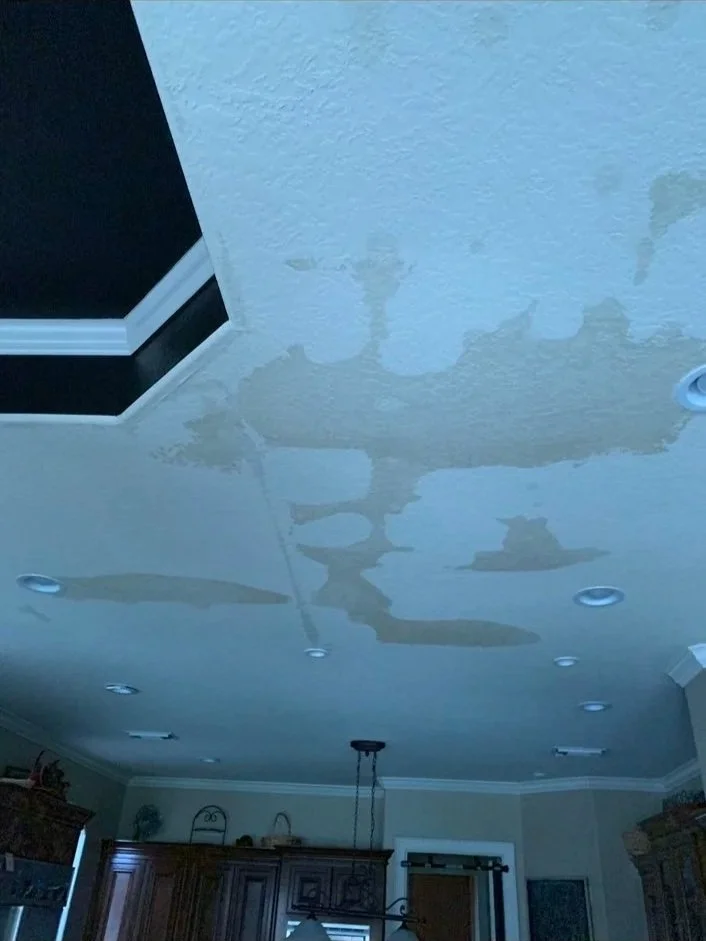
A roof leak does not always start with water dripping into a bucket. It may first appear as a brown ceiling stain, peeling paint, or damp attic insulation.
Pay attention to spots that appear or grow after rain. Photograph changes and schedule an inspection instead of simply painting over the stain. The goal is to identify where the water enters and address the cause.
A small roof leak may be resolved with a targeted roof repair. The right solution depends on the source of the leak and the condition of the surrounding roof.
2. Missing or damaged shingles
Look from the ground for gaps in the shingle pattern, torn sections, or pieces of roofing material around your property. These changes deserve attention, especially after strong winds.
Curling edges and cracks also warrant a closer look, but their severity matters. Minor surface aging is different from a deep crack through the shingle.
Have a roofing professional determine whether the damage is isolated or part of a broader problem. Replacing a few damaged shingles may be appropriate when the surrounding roofing system remains sound.
3. Problems around flashing and roof penetrations
Your shingles are only part of the system that keeps water out. Flashing protects transitions around chimneys, walls, and other roof details. Pipe boots help seal around plumbing vent pipes.
Leaks near these areas can occur even when most of the shingles still look good. Damaged flashing or deteriorated seals may need repair or replacement.
If you notice staining near a chimney or water entering around a roof penetration, ask for an inspection of those details. A complete diagnosis should look beyond the shingles.
4. Excessive shingle granule loss
Asphalt shingles have a protective surface of small mineral granules. You may notice loose granules near downspout outlets or in gutters.
Some shedding is normal, especially after a new roof installation. Granules alone do not prove that a roof has hail damage or needs replacement.
More concerning signs include obvious bare areas or widespread loss that exposes the asphalt beneath. An inspection can help distinguish ordinary shedding from deterioration that needs attention.
5. Clogged gutters and drainage problems
During rain, watch from a sheltered location for water overflowing gutter edges or spilling behind the gutter. Afterward, look for debris buildup and staining around the roof edge.
Clogged gutters can contribute to leaks, and damaged fascia or soffits may indicate a problem that needs investigation.
Have gutters and downspouts cleared safely, and ask a professional to check areas where overflow keeps returning. If you also have an interior leak, do not assume gutter cleaning alone has fixed it.
6. Hail damage that is difficult to see
A roof can experience hail damage without immediately leaking. From the driveway, shingles may appear unchanged even when a closer inspection reveals damage.
Dents in exposed metal components can be clues that hail struck the property, but they do not establish the condition of every shingle. A professional inspection should evaluate the roofing materials themselves and document the findings.
After a significant hailstorm, request a storm damage assessment rather than waiting for a ceiling stain. Clear photos and an explanation of the findings help you understand the recommended next step.
7. Sagging or an uneven roofline
A noticeable dip or sag deserves prompt professional evaluation. It can indicate problems involving the roof decking or supporting structure.
Stay off the roof and avoid entering an area that appears unstable. The cause needs to be assessed before deciding what work is required.
This is a situation where replacing visible shingles alone may not address the underlying problem.
Does your home need roof repair or roof replacement?
The decision should follow the condition of the roof, the extent of the damage, and whether a repair can provide dependable protection.
Roof repair may make sense for an isolated leak, a limited area of damaged shingles, or a specific flashing problem when the rest of the roof remains serviceable.
Roof replacement may be the better option when deterioration is widespread, leaks keep recurring, or the existing materials cannot support a durable repair.
Ask your contractor to show you the damage, explain the proposed scope, and describe why the recommendation fits your roof.
What homeowners can check safely
You do not need to climb onto your roof to spot a reason for an inspection.
Walk around the property and look for missing shingles or fallen roofing material.
Check ceilings and upper walls for new water stains.
Watch for gutter overflow during rain from a safe, sheltered location.
Photograph visible changes and note when you first noticed them.
Schedule an inspection after significant storm damage or an unexplained leak.
Ground-level checks are a starting point. Leave roof access and close inspection to trained professionals.
Schedule a free roof inspection with Apex Roofing Solutions
If you have noticed a roof leak, missing shingles, or possible storm damage, get answers before the next heavy rain.
Apex Roofing Solutions provides roof repair, roof replacement, storm damage inspections, and emergency tarping for homeowners across Katy, Cypress, Sugar Land, and Greater Houston. We photo and video document roof conditions to help you understand what is happening overhead.
Call 281-744-9841 or visit apex-roofs.com to schedule your free roof inspection.